Steve McCurry – known for his 1985 cover portrait photo of 12-year old Afghan girl named Sharbat Gula that was taken with Nikon FM, Nikkor 105mm f/2.5 and Kodachrome 64
Jodi Cobb – known for her photos of the women of Saudi Arabia and of the Geishas
Wlliam Albert Allard – known for his photos of people using the Leica M6 35mm rangefinder system
Joel Sartore – through the The Great Courses, I have learned so much about how to take good pictures from him
Lynsey Addario – her book entitled It’s What I Do: A Photographer’s Life of Love and War published in 2015 described that started with her father’s Nikon FG and 50mm lens
Sports Illustrated
Water Iooss Jr. – known for his photos of Michael Jordan and the SI Swimsuit models
My favorite lens is the Nikkor AF-S 58mm f/1.4G. With very shallow depth-of-field, it can be hard to nail down focus, especially at long distances and in low light. However, it produces 3D-like images with beautiful bokeh and sharp results when focus is achieved. Although it is the largest Nikon normal lens, it actually fits on the Nikon D800 nicely, providing good balance for the camera-lens combination.
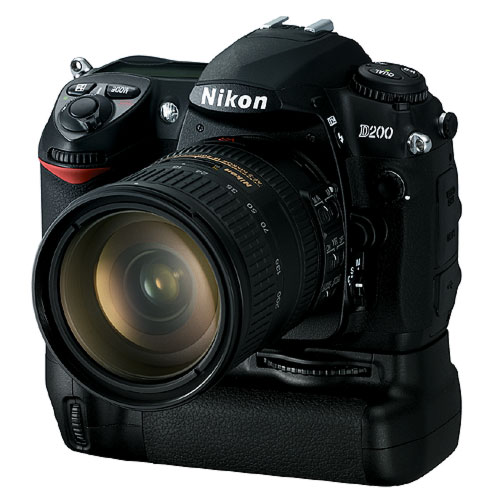
It is truly a nifty fifty! I wish it was available when I was doing a lot of International travel from 2009 to 2013. In my travels, I’ve used the Nikkor 20mm f/2.8 AI-s or the Voigtlander 40mm f/2 on the Nikon D200 to minimize bulk and weight. Manual focusing on the D200 and other DSLRs, unfortunately, is difficult to get sharp results because DSLRs are not equipped with split-image focusing screens for precise manual focus. In addition, on the APS-C (Advanced Photo System type-C) image sensor, the D200 gives me 1.5x cropped images, e.g., 30mm focal length equivalent on a 20mm lens.
In addition to the above lenses, my favorite Nikon lenses – especially on the FX full-frame DSLRs such as Nikon D810 and Nikon D4s – are…
Prime lenses: Nikkor AF-S 24mm f/1.4G, Nikkor 28mm f/2.8 AI-s, Nikkor 50mm f/1.2 AI-s, Nikkor AF 85mm f1.4D, Nikkor AF-S 200mm f/2G VR and Nikkor AF 300mm f/4.
Zoom lenses: Nikkor AF-S 17-35mm f/2.8D, Nikkor AF-S 28-70mm f/2.8D, Nikkor AF 80-200 f/2.8D and Nikkor AF-S 200-400mm f/4G VR.
My favorite lenses on the Fujifilm X-E2 camera are Fujinon XF 18mm f/2 R, Fujinon XF 27mm f/2.8 R (pancake lens), Fujinon XF 35mm f/1.4 R, Fujinon XF 60mm f/2.2 R (macro lens) and Fujinon XF 55-200mm f/3.5-4.8 R LM OIS. Since the X-E2 uses the APS-C image format sensor, these lenses give me the equivalent focal lengths of 27mm, 41mm, 53mm, 90mm and 83-300mm respectively.
The worst lens I’ve used is Nikkor AF-S DX 18-70mm f/3.5~4.5.
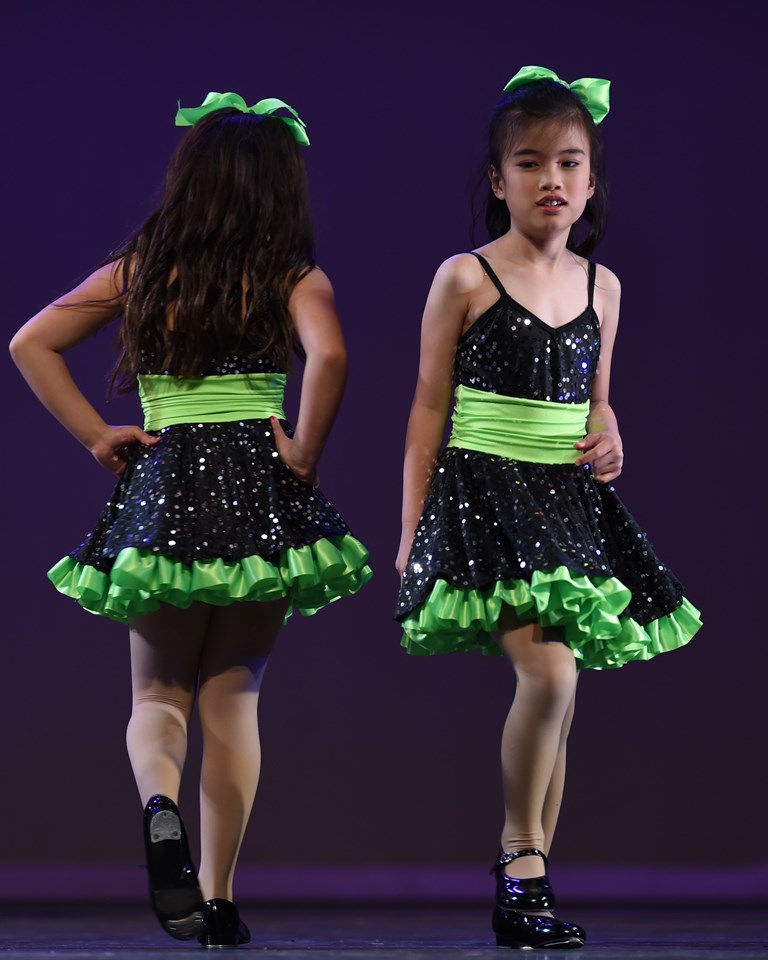
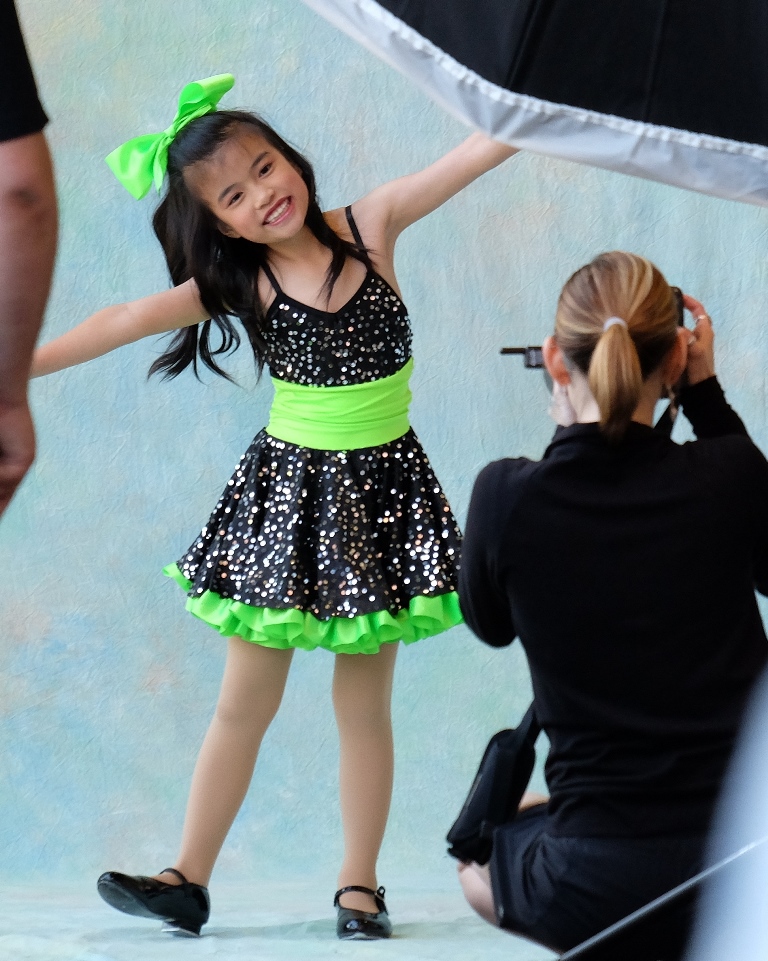
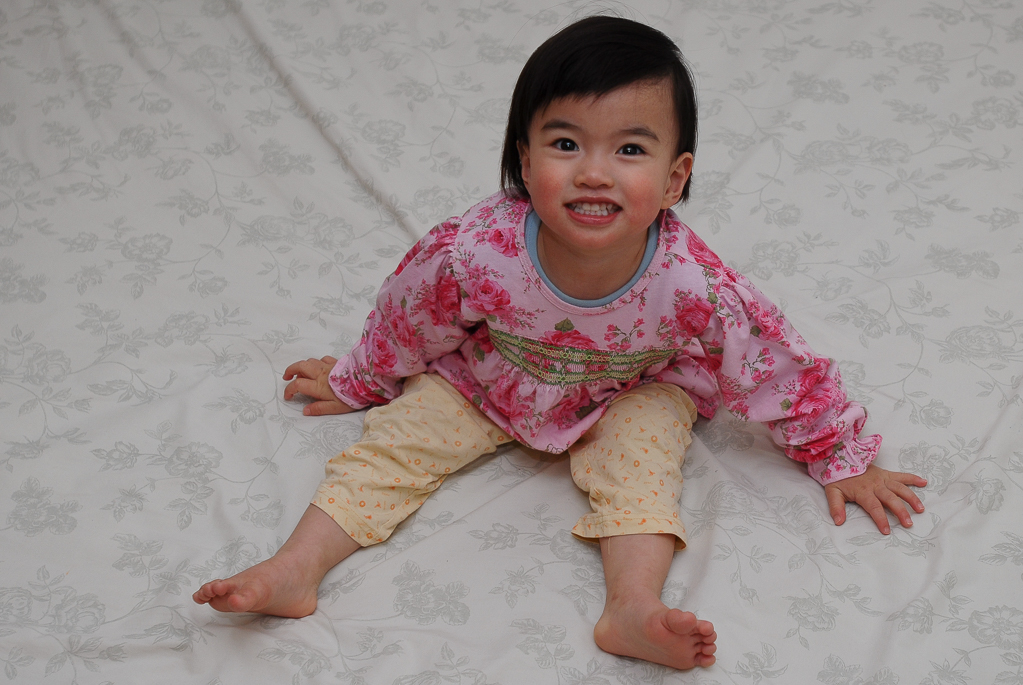
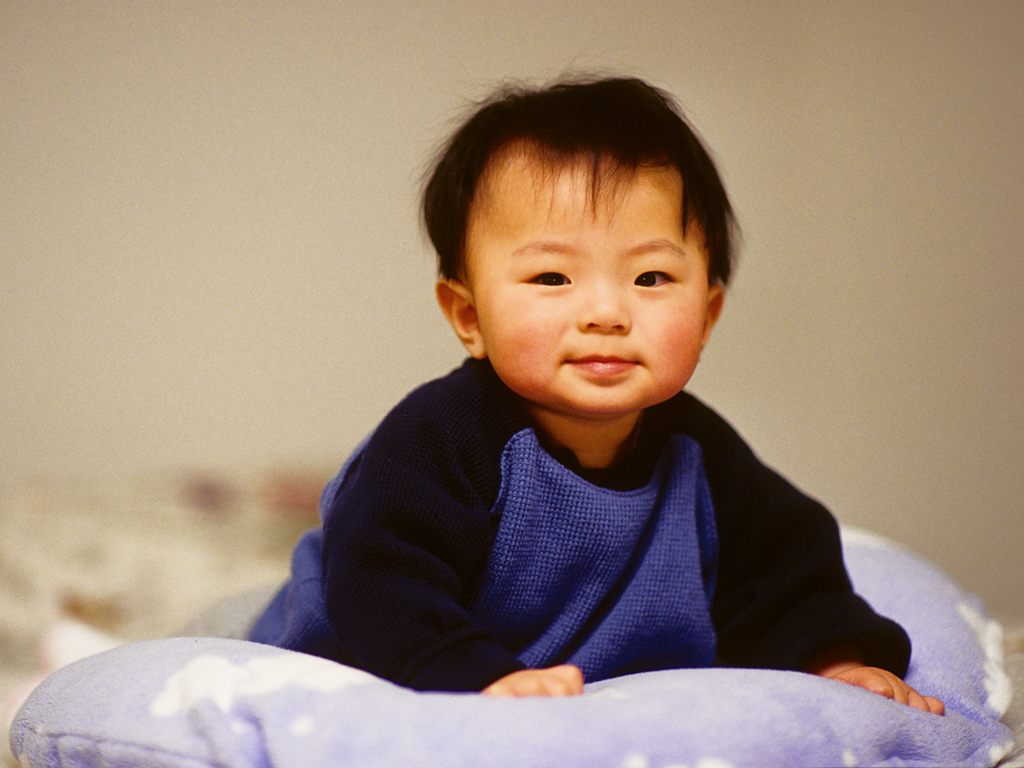
Maggi’s Dance Recital | 30-MAY-2015 | Nikon D4s | Nikkor AF-S 200mm f/2G | f/2 @ 1/200 sec. | ISO 640Maggi Posing for Photo Shoot | 29-MAY-2015 | Fujifilm X-E2 | Fujinon XF 55-200mm f/3.5~4.8 R LM OIS | f/4.8 @ 1/60 sec. | ISO 1600Maggi on her 7th Birthday | 2014 | Nikon D800 | Nikkor AF-S 58mm f/1.4G | f/1.4 @ 1/125 sec. | ISO 100Maggi with Big Headphones | 30-MAR-2011 | Nikon D200 | Nikkor 50mm f/1.2 AI-s | f/1.2 @ 1/200 sec. | ISO 200Maggi on Christmas Day | 25-DEC-2009 | Nikon D200 | Nikon AF 35mm-70mm f/2.8D | f/4 @ 1/60 sec.Maggi on Christmas Day | 25-DEC-2008 | Nikon D200 | Nikon 50mm f/1.2 Ai-S | f/2 @ 1/125 sec. | ISO 400Maggi and Mom | 25-JAN-2008 | Nikon D200 | Nikkor AF 85mm f/1.4D | f/4 @ 1/60 sec. | ISO 100
While over 100 million Americans remember February 1, 2015 for the exciting Super Bowl XLIX football game when the New England Patriots defeated the Seattle Seahawks 28-24, we will remember it differently…
Just when the Super Bowl kicked off at 5:30PM, we had our own soup-a-bowl and enjoyed a bowl of noodle soup for dinner!
19.3 inches of snow accumulated during the weekend. Although it was a wondrous sight, we shoveled snow multiple times in the morning, day and night so that our driveway and sidewalks would be relatively clear of snow.
Eugene and Maggi were delighted to have a 3-day weekend when School District U-46 decided to close schools on February 2.
19.3 inches of snow as seen on our deck on the morning of February 2, 2015
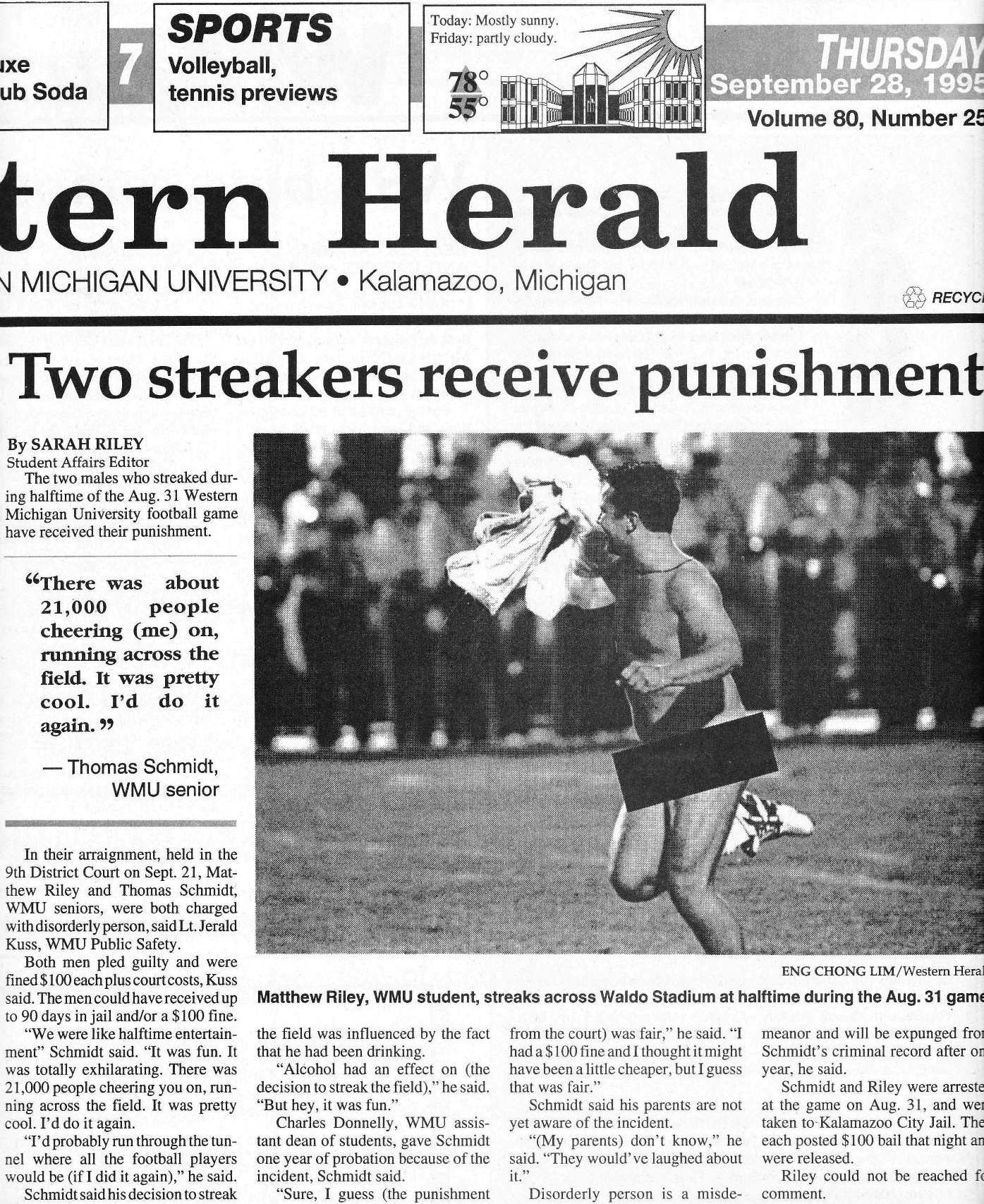
At the Western Michigan University football game on August 31, 1995, I was in the Waldo Stadium field along with several professional photographers on assignment for our respective newspapers/organizations. In the drizzle, I was trying to keep my equipment dry using a plastic bag that once contained a loaf of bread. With a Nikon F3HP mounted on a MD4 motor drive and Nikkor AF 300mm f/4 lens, I was lucky to have captured in sharp focus one of the two streakers running across the field. The film used was Kodak Tri-X that was push processed from ISO 400 to ISO 1,600.
The Western Herald provided the film. I provided the camera equipment. I developed the film and printed the picture using the provided materials (i.e., developer, fixer, stopbath and photo paper), equipment (i.e., film developing tank, squeegee, photo chemical tubs and photo enlarger) and darkroom. My compensation was just $5 per picture published. It wasn’t for the money that my fellow college photojournalists and I were working for. It was because of our passion in photography that we did it.
Everything happened so fast that I’m amazed that the picture turned out OK even though it was manual focused. As a matter of fact, I could not remember if I had any pictures of the football game published. It is my understanding that I was the only photographer who got a usable picture of the streaker. If it happened today, my guess is that hundreds of spectators would have snapped away using their mobile phones and posted their pictures and videos on various social media sites!
My picture that took almost a month to publish because the newspaper debated about how to print it.
My favorite Nikon lenses when I was doing film photography (i.e., before 2005) are…
Prime lenses: Nikkor AF 20mm f/2.8D, Nikkor 28mm f/2.8 AI-s, Nikkor AF 85mm f1.4D and Nikkor AF 300mm f/4.
Zoom lenses: Nikkor AF 35-70mm f/2.8D and Nikkor AF 80-200 f/2.8D. I like the Nikkor 35-105mm f/3.5~4.5 AI-s for its size but it is too slow for low-light photography.
The only film photography I do now is on my Pentax LX. My favorite Pentax K-mount lenses are Pentax SMC-A 24mm f/2.8, Pentax SMC-A 35mm f/2, Pentax SMC-M 50mm f/1.4, Rokinon 85mm f/1.4 Aspherical IF, Pentax SMC-M 135mm f3.5, Tamron MF SP 300mm f/2.8 and Tamron MF SP 70-210 f/3.5
Other Pentax K-mount lenses I’ve used are Takumar 28mm f/2.8, Pentax SMC-M 35mm f/2.8, Pentax SMC-M 50mm f/1.7 and Pentax SMC-A 50mm f/1.7 .
The worst lenses I’ve used are Tamron MF SP 35-105mm f2.8, Nikkor 105mm f/1.8 AI-s and Nikkor AF 24-50mm f/3.3~4.5 because they are not sharp wide open.
Nikon F4e w/ Nikkor AF 85mm f/1.4D (2005)Pentax Super Program w/ Pentax SMC-A 35mm f/2 (2004)Nikon F3HP w/ Nikkor 28mm f/2.8 AI-s (2000)Nikon F4s w/ Nikkor AF 20mm f/2.8D and Nikkor AF 80-200mm f/2.8D (1994)Pentax LX w/ Pentax SMC-M 50mm f/1.4 (1991)
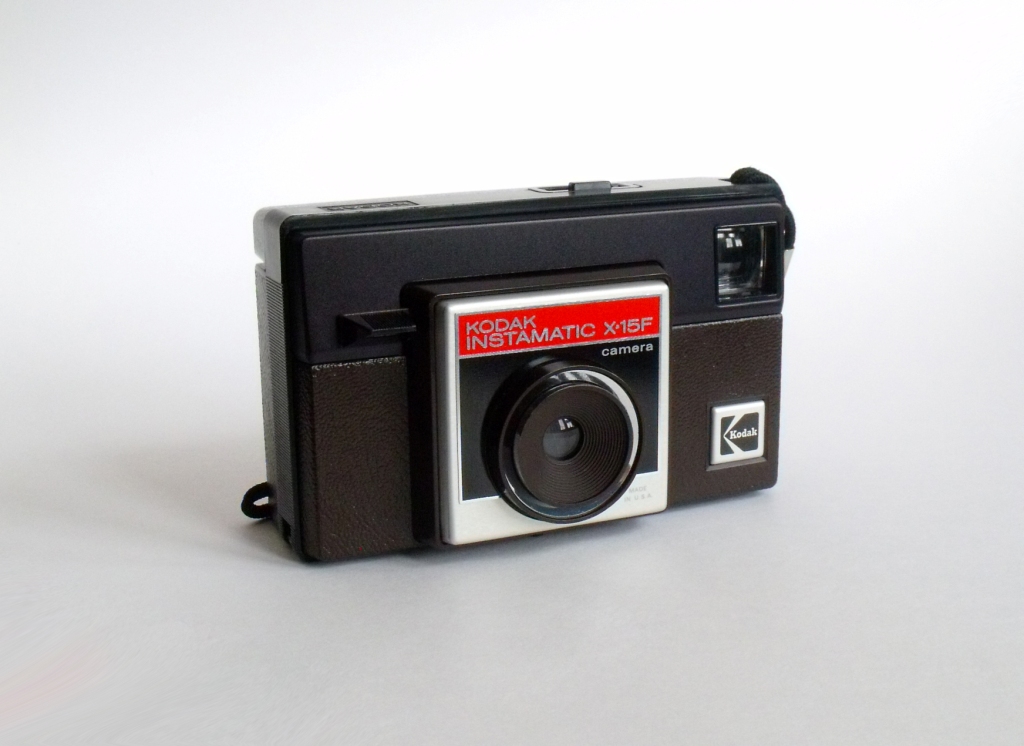
My first camera was the Kodak Instamatic X-15F (1980). I bought it with the money I earned delivering the Eugene Register Guard. It used the 126 film and required neither focusing nor exposure setting.
Kodak Instamatic X-15F
I have been fascinated about cameras since then. I’ve gone on to use Pentax ME-F (1982), Pentax LX (1984), Nikon F4s (1994), Nikon F3HP (1994), Pentax Super Program (1995), Sony Cybershot DSC-W1 (2004), Nikon D200 (2006), Nikon D800/D810 (2012/2014), Fujifilm X-E2 (2014) and Nikon D4s (2014). I’ve also used my father’s Pentax ME-Super (1979) and Nikon FG (1984), and a relative’s Canon EOS 5D Mark III (2013).
The Pentax ME-F camera was my first single lens reflex (SLR) camera. It had an autofocus indicator in the viewfinder. It also had an optional autofocus zoom lens with a built-in motor.
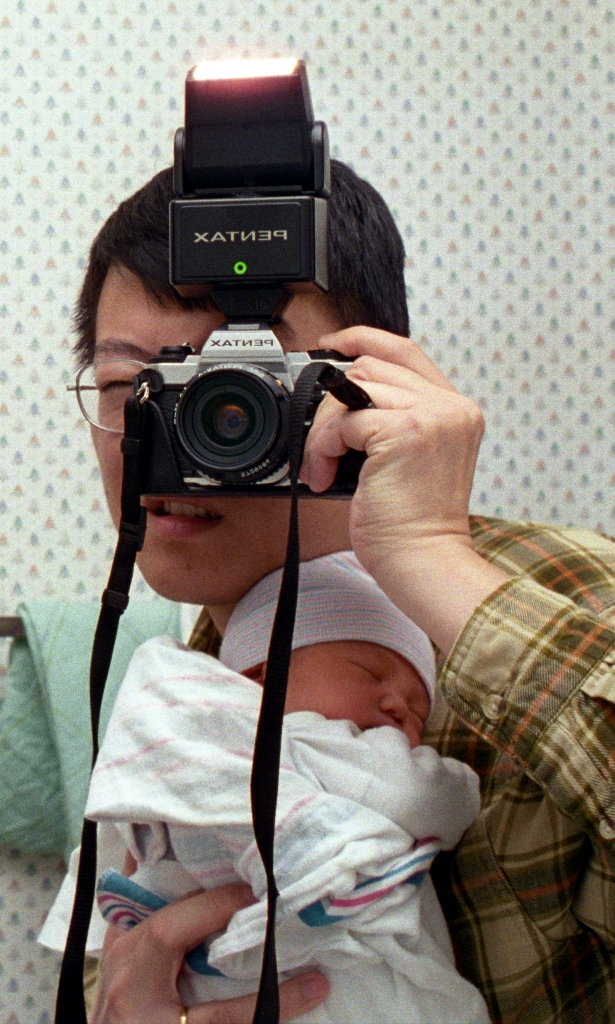
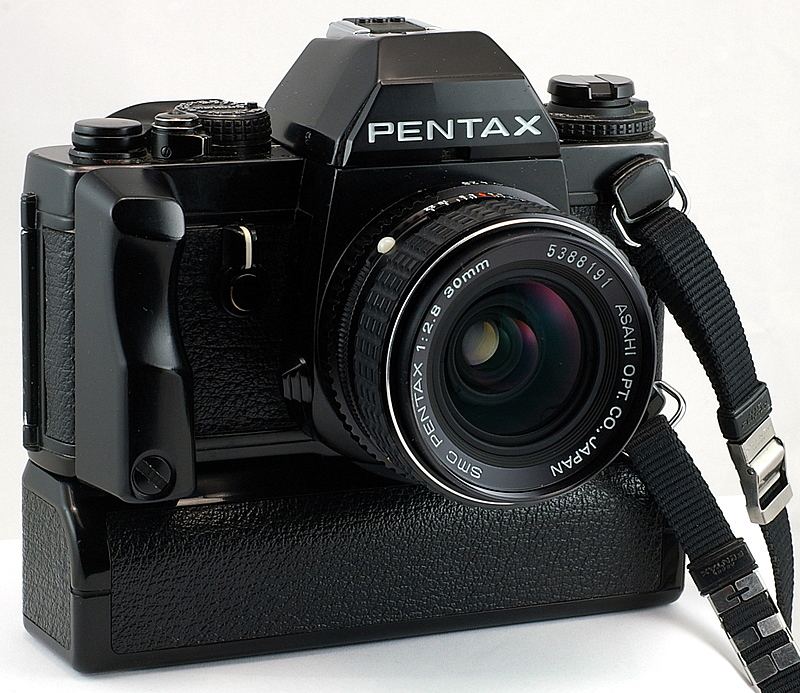
The Pentax LX was my first SLR camera that had advanced capabilities, such as, through-the-lens off-the-film metering, interchangeable viewfinder, interchangeable focusing screens, mirror lockup, depth-of-field preview and weather sealing. It could operate without batteries using its mechanical shutter from 1/2,000th sec. to 1/75th sec. Despite it being classified as a professional-level camera, it suffered from a well-known sticky-mirror defect.
Pentax LX with Winder LX
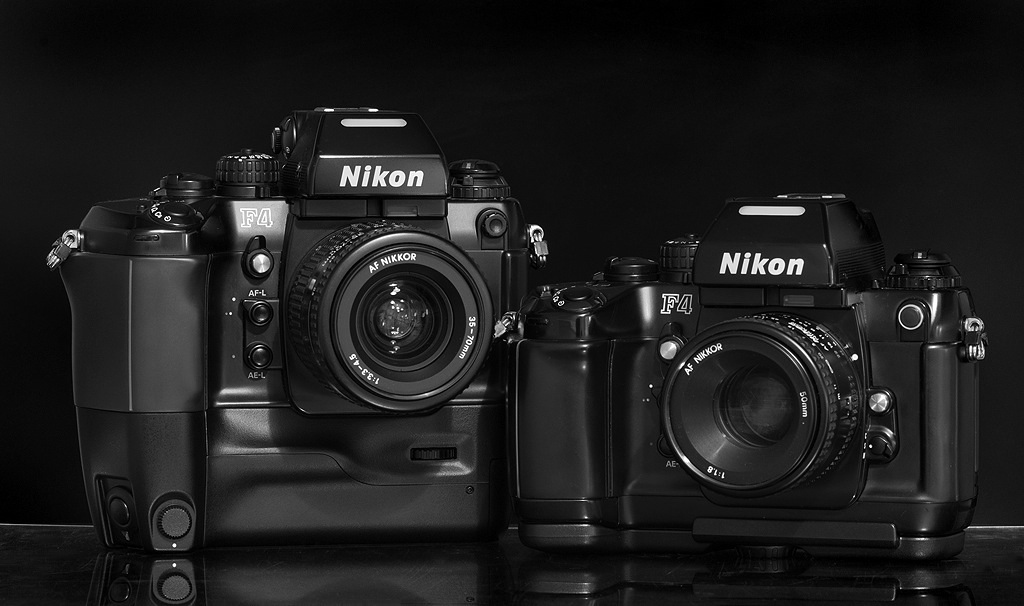
My first programmed autofocus camera was the Nikon F4s – the autofocus motor was built into the camera. It was also my first camera that totally relied on batteries to operate as it lacked the mechanical backup shutter that the F3HP had. Spare batteries had to be on hand at all time to be able to continuously use the camera.
Nikon F4e and Nikon F4
In my transition to digital, I got a film/slide scanner Nikon CoolScan 5000 ED. It was capable of producing over 20 megapixel images albeit it takes a long to time to complete a scan.
My first DSLR camera was the Nikon D200. It succeeded the D100, which I consider as the first viable digital camera. It had a 10.2 megapixel DX-format (APS-C) image sensor with a 1.5x crop factor.
Nikon D200 w/ MB-D200 Battery Grip
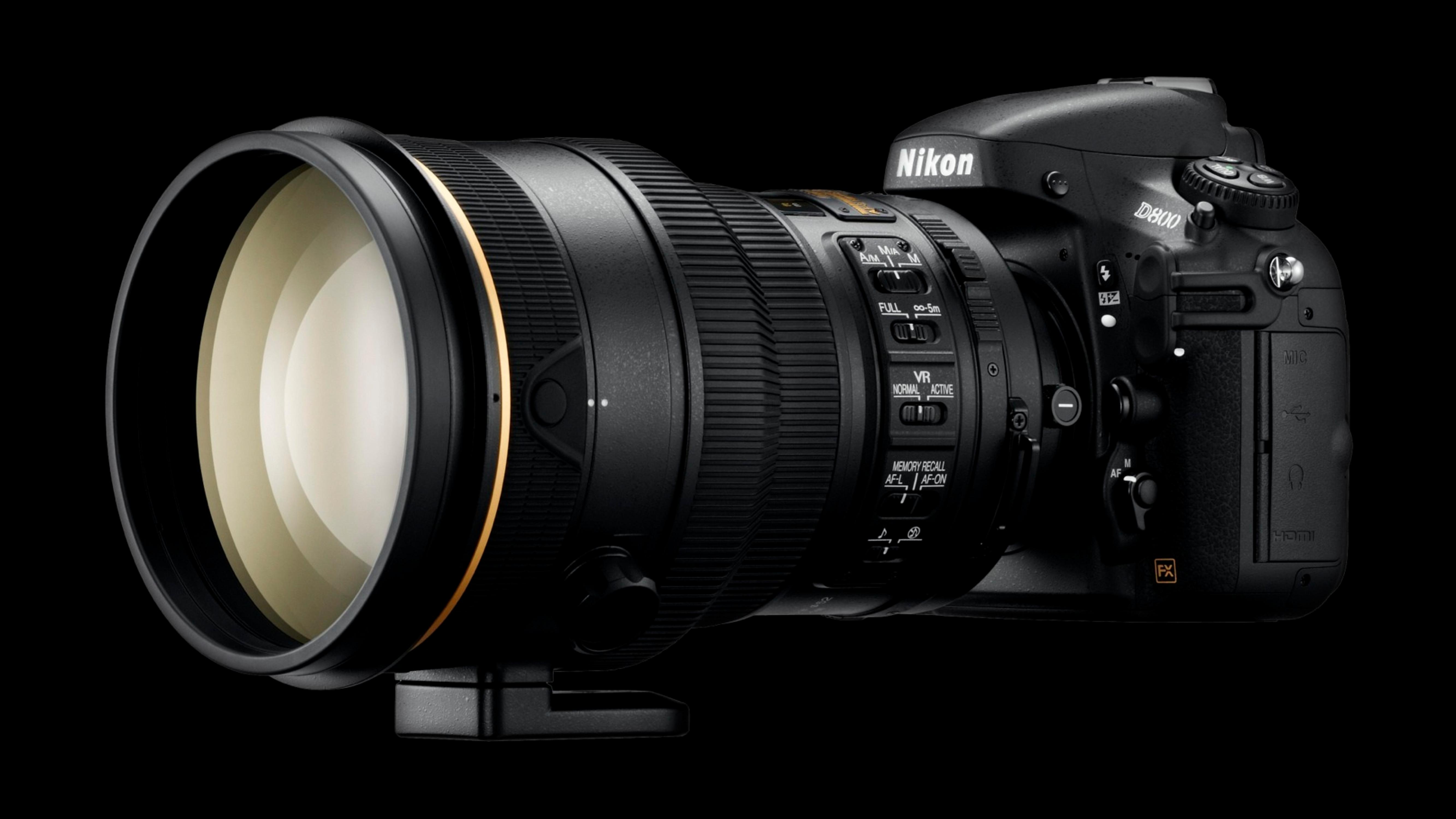
The D800 is my first 36.3 megapixel FX-format full-frame DSLR with improved low-light imaging capability usable up to ISO 2,500, but I would have preferred to have the older D700 because of its superior low noise high ISO performance. In addition, the D800 had a left autofocus problem that plagued early production versions of the camera, resulting in me having to send it back to Nikon for warranty repair.
Nikon D800 w/ Nikkor AF-S 200mm f/2G
Fujifilm X-E2 was my first mirror-less lens-interchangeable rangefinder camera. Inspired by Robert Capa, I have always liked the simplicity of the rangefinder but could not afford the Leica. A major drawback of this camera, however, is its slow autofocus.
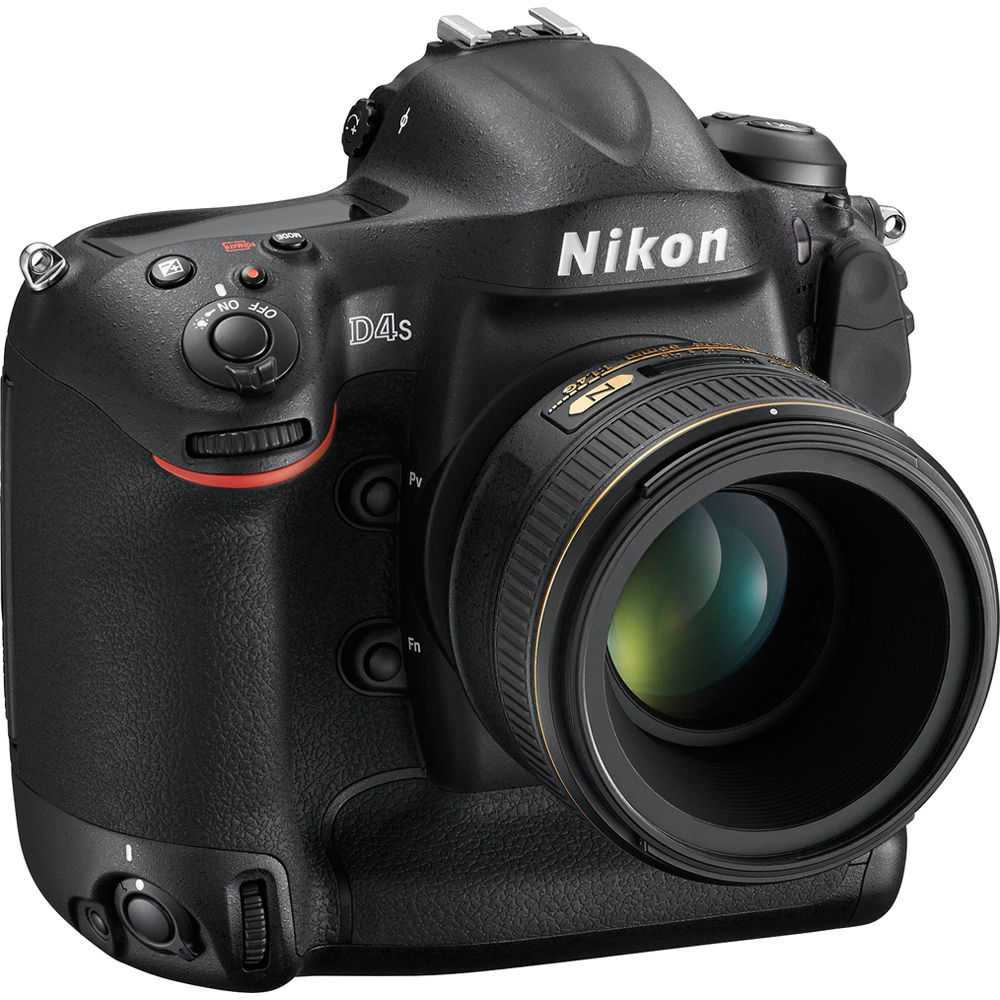
The camera I wanted very much but did not get was the Nikon F5. By the time, I got around to shopping for my next camera, cameras had gone digital. The latest camera that I admire is the Nikon D4s because of its advanced capabilities, especially for responsive low-light imaging.